
Abstract:
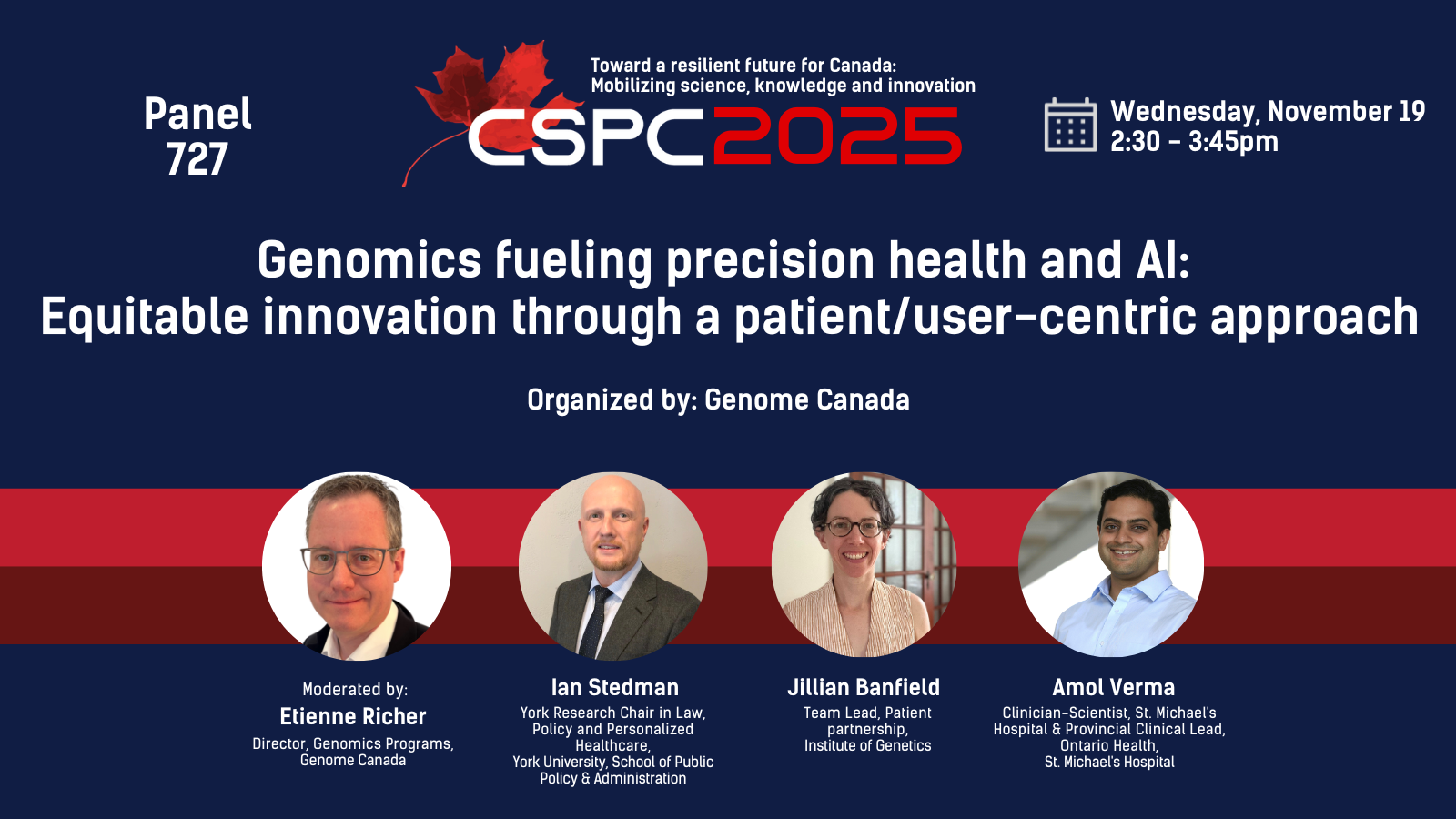
This panel explores how innovations in genomics and AI can transform healthcare when shaped by patient rights, equity and lived experience. As precision health advances, meaningful inclusion of patients and end-users is essential. We will examine what responsible, equitable integration of these technologies looks like—and the policies needed to ensure they deliver better outcomes for all. Featuring patients, policy leaders, researchers, and healthcare innovators, this panel will co-define a vision for patient- and policy-aligned innovation in Canada’s health system. Join our Q&A on: What does meaningful patient inclusion look like? What policy frameworks can ensure these technologies deliver better outcomes?
Summary of Conversations
The discussion centered on the transformative potential of integrating artificial intelligence (AI) with genomics to advance precision health, while emphasizing the critical necessity of a true patient-centric approach. Panelists explored the creation of national data assets and the shift towards mission-driven initiatives to unlock siloed health information for broader research use. A compelling personal narrative illustrated how digitized health records and AI analysis could drastically reduce diagnostic wait times for rare diseases from decades to mere months, underscoring the life-saving potential of accessible data. The dialogue highlighted the importance of moving beyond data collection to meaningful partnership, where patients are involved in governance and design rather than just being subjects. Key themes included overcoming technical, policy, and cultural barriers to data sharing, ensuring equitable access for diverse and rural populations, and the need for standardized, interoperable systems to leverage Canada’s diversity for global innovation.
Take Away Messages/Current Status of Challenges
- Fragmentation of Health Data: Valuable clinical data currently resides in isolated silos within hospital systems and legacy vendor platforms, making it technically difficult to aggregate and access for large-scale research and innovation.
- Cultural Resistance to Sharing: A significant barrier is the organizational culture within healthcare institutions, where entities are often hesitant to share data due to a desire to monetize assets or fear of privacy risks, prioritizing protection over public good.
- Lack of Diversity in Genomic Data: Current global genomic datasets are heavily skewed, with approximately 85% representing individuals of white ancestry, which risks creating precision health tools that are not effective for diverse global populations.
- Inequitable Geographic Access: There is a stark disparity in access to advanced diagnostics and clinical trials between patients in major urban centers and those in rural or remote communities, limiting the reach of precision health innovations.
- Technical Interoperability Hurdles: Data extracted from different hospitals often exists in varying formats with inconsistent definitions, requiring extensive, labor-intensive work to standardize and de-identify before it can be used for AI modeling.
- Tokenism in Patient Engagement: While patient involvement is increasingly required, it often remains symbolic or “tokenistic”; meaningful engagement is challenging and frequently lacks the necessary depth, financial compensation, and integration into decision-making processes.
- Delayed Diagnosis Due to Data Gaps: The inability to effectively analyze longitudinal patient data prolongs the “diagnostic odyssey” for rare disease patients, missing opportunities for early intervention that could prevent severe health outcomes.
- Policy and Privacy Complexities: Navigating the distinct privacy legislation and regulatory landscapes across different provinces creates a complex environment for establishing national data-sharing networks.
Recommendations/Next Steps
- Adopt Federated Learning Models: Implement federated learning technologies that allow AI algorithms to travel to the data rather than moving the data itself, thereby solving privacy concerns and adhering to provincial data residency laws.
- Formalize and Compensate Patient Partners: Move beyond volunteer models by treating patient partners as experts, providing them with financial compensation, training, and specific roles within governance structures to ensure their input meaningfully shapes research.
- Standardize Data for Interoperability: Prioritize the adoption of global standards for clinical and genomic data to ensure that information from disparate sources can be harmonized and utilized effectively for national-scale AI projects.
- Leverage Diversity for Global Leadership: Actively expand data collection, collaboratively and with permission of communities, to include Canada’s diverse ethnic and Indigenous populations, positioning the country to lead in developing precision health tools that are globally relevant and equitable.
- Streamline Data Access Governance: Develop efficient governance frameworks that allow researchers to access data quickly (e.g., within two weeks) through standardized ethics reviews and sharing agreements, demonstrating that policy barriers are surmountable.
- Build “Win-Win-Win” Ecosystems: Design initiatives that simultaneously improve patient care outcomes, advance scientific research, and drive economic growth to secure buy-in from all stakeholders—including patients, researchers and private sector partners.
- Expand Networks Beyond Urban Centers: Deliberately extend research networks to include community hospitals and rural settings to ensure that AI tools are trained on representative data and that innovations benefit all Canadians, not just those in urban areas.
- Shift Organizational Culture: Invest in transparency, trust-building and education to shift the healthcare mindset from data ownership to data stewardship, emphasizing the social contract to use patient data for the public good.
* This summary is generated with the assistance of AI tools