
Clean Energy and a Cold Climate” is Not Enough: National AI Sovereignty Requires a Full Sustainable Life-Cycle Framing
Author(s):
Sheng Lun Christine Cao
Marjan Eggermont
Laleh Behjat

Disclaimer: The French version of this text has been auto-translated and has not been approved by the author.
Canada’s National AI Strategy, “AI For All” [1], presents an ambitious vision to foster trust, opportunity, and sovereignty across the socio-techno-economic value chain for the Canadian AI sector. The strategy treats AI infrastructure and energy requirements as strategic assets, rather than afterthoughts. This is in contrast to the 2025 America’s AI Action Plan [2] and the European Commission’s approach to AI [3], where both lacked a vision for supporting AI infrastructure. However, the strategy’s ambitious vision fails to recognize the system-level complexities of pursuing true sustainable infrastructure for AI.
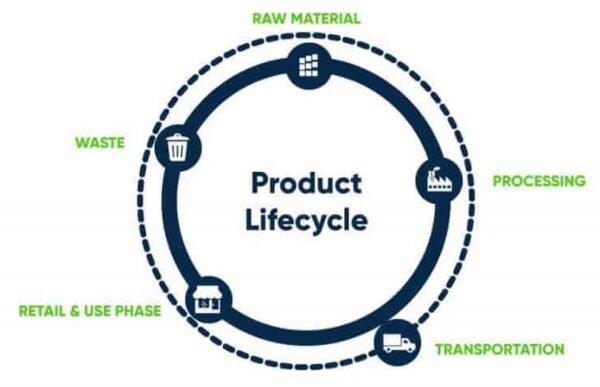
Figure 1: Example of a Product Life-Cycle [4]
The core sustainability claim of the strategy is Canada’s ability to provide sustainable power to AI data centres during use, and our uniquely cold climate used to cool the data centres. Canada’s electricity generation portfolio is currently 83% non- or low-carbon emitting, one of the cleanest power grids on earth. Pillar 4 of the strategy specifies a push for sustainable energy usage in the data centre growth, while also highlighting the synergy with Canada’s National Electricity Strategy from earlier this year, aiming to double the national electricity grid capacity by 2050 [5]. These are valid measures to ensure the sustainability of AI data centre operations, but the strategy grossly overestimates Canada’s true capacity to provide clean power for the AI power demand.
We rightfully should be concerned about the resource consumption of AI. The International Energy Agency estimated a global doubling of electricity consumption from data centres between 2024 and 2030, from 415 TWh to 945 TWh [6], and the Electrical Power Research Institute showed high uncertainty (between 9% to 17%) in United States AI data centre electricity consumption growth by 2030 [8]. In comparison, Canada’s 2023 net electricity generation was only 620 TWh [7]. Canada has one of the cleanest power grids on earth, but we are already at the limit of meeting existing demand, and significant grid capacity expansion is needed to meet this new AI power demand. Unfortunately, we have absolutely no certainty about the electricity demand requirements from AI data centres by 2030, and this is a tremendous challenge for grid planning. We don’t know how much more generation and transmission capacity we must increase by, but we cannot overbuild our electricity infrastructure, lest we waste billions of tax dollars and potential economic revenue.
Uncertainty in electricity demand also triggers cascading environmental concerns. AI data centres require a steady baseload power source, with ability to ramp up generation capacity, depending on influxes of computing workloads. Most common renewable energy resources, including wind and solar PV (Photovoltaic), cannot provide that type of power without sufficient operational planning and being paired with battery energy storage. Therefore, the path of least resistance to get an AI data centre up and running quickly is to use a natural gas power plant with significant marginal emissions.
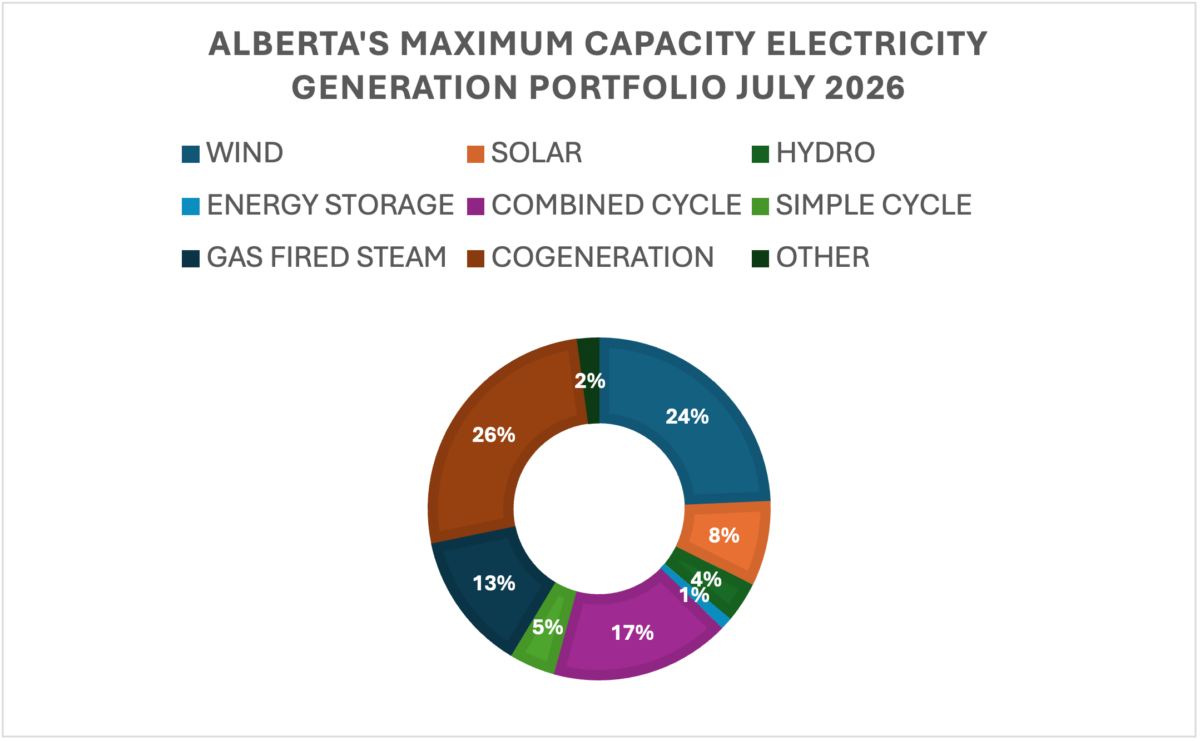
Figure 2: Alberta’s Maximum Capacity Electricity Generation Portfolio July 2026 [9]
Emissions are the tip of the iceberg in terms of sustainability considerations overlooked by the strategy. Other common environmental concerns including excessive water usage [13], land usage [13], light and noise pollution [14], and fitness consequences for species [15], are not comprehensively addressed. Finally, the strategy does not mention the end-of-life considerations of these AI data centres. Infrastructure projects must be maintained and upgraded, and they must eventually be decommissioned. Only building to increase our national AI capacity is very myopic, without considering whether we have the national ability to maintain, replace, recycle, and decommission the electronics used in AI data centres at various stages of their lifetime.
AI for All is timely in the current AI discourse and in the context of Canada’s geopolitical and economic importance. Its scope and vision should be lauded for considering AI as a value chain beyond its technical possibilities. However, its view on Canada’s ability to sustainably develop AI infrastructure while accelerating economic growth is optimistic at best, and misleading in details. The strategy identifies components of a sustainable AI ecosystem in piecemeal but fails to take a true life-cycle approach capable of turning hope into actionable policy.
In the implementation of this strategy, we strongly urge the federal government to consider adopting a life-cycle framing for AI infrastructural projects. The government must also engage with all stakeholders involved in the entire life-cycle of each project, especially the everyday citizens whose lives are directly impacted by major AI data centre projects. We also urge the federal government to work closely with scientists and engineers for nuanced and science-based policymaking. Canada should rightfully pursue AI sovereignty and economic gain, but such pursuit cannot come at the expense of further environmental destabilization.
References
[1] Government of Canada, “Canada’s National Artificial Intelligence Strategy: AI for All.” Accessed: Jul. 23, 2026. [Online]. Available: https://ised-isde.canada.ca/site/ised/en/canadas-national-artificial-intelligence-strategy-ai-all
[2] The United States White House, “Winning the Race: America’s AI Action Plan.” Jul. 2025. [Online]. Available: https://www.whitehouse.gov/wp-content/uploads/2025/07/Americas-AI-Action-Plan.pdf
[3] European Commission, “European approach to artificial intelligence | Shaping Europe’s digital future.” Accessed: Jul. 23, 2026. [Online]. Available: https://digital-strategy.ec.europa.eu/en/policies/european-approach-artificial-intelligence
[4] Z. Quist, “Life Cycle Assessment (LCA) – Complete Beginner’s Guide,” Ecochain. Accessed: Jul. 23, 2026. [Online]. Available: https://ecochain.com/blog/life-cycle-assessment-lca-guide/
[5] Prime Minister of Canada, “Prime Minister Carney announces forthcoming National Electricity Strategy,” Prime Minister of Canada. Accessed: Jul. 23, 2026. [Online]. Available: https://www.pm.gc.ca/en/news/news-releases/2026/05/14/prime-minister-carney-announces-forthcoming-national-electricity
[6] IEA, “Energy and AI – Analysis,” IEA. Accessed: Sep. 04, 2025. [Online]. Available: https://www.iea.org/reports/energy-and-ai
[7] C. E. R. Government of Canada, “CER – Renewable Energy in Canada.” Accessed: Jul. 23, 2026. [Online]. Available: https://www.cer-rec.gc.ca/en/data-analysis/energy-markets/renewable-energy-canada/provinces/renewable-power-canada-canada.html
[8] Electric Power Research Institute (EPRI), “Powering Intelligence 2026: Updated Scenarios of U.S. Data Center Electricity Use and Power Strategies.” Accessed: Jul. 23, 2026. [Online]. Available: https://www.epri.com/research/products/000000003002034696
[9] Alberta Energy System Operators (AESO), “Current Supply and Demand Report.” Accessed: Jul. 23, 2026. [Online]. Available: http://ets.aeso.ca/ets_web/ip/Market/Reports/CSDReportServlet
[10] Murad Hemmadi, David Reevely, Aleksandra Sagan, Chaimae Chouiekh, Martin Patriquin, and Catherine McIntyre, “We found every data centre in Canada,” The Logic. Accessed: Jul. 23, 2026. [Online]. Available: https://thelogic.co/news/the-big-read/data-centres-artificial-intelligence-canada-map/
[11] Government of Alberta, “Alberta’s AI Data Centre Strategy – Powering the future of artificial intelligence,” Dec. 2024.
[12] Government of Alberta, “Backgrounder: Alberta’s Renewables inquiry and the related pause.” Feb. 28, 2024. [Online]. Available: https://www.alberta.ca/system/files/au-backgrounder-albertas-renewables-inquiry-and-related-pause-20240228.pdf
[13] Miriam Aczel, Sanaz Chamanara, Mir Matin, Aria Farsi, Tshilidzi Marwala, and Kaveh Madani, “Environmental Cost of Artificial Intelligence: Carbon, Water, and Land Footprints.” Aug. 12, 2026. Accessed: Jul. 23, 2026. [Online]. Available: https://unu.edu/inweh/collection/environmental-cost-of-AIs-Enrgy-Use-Carbon-water-and-land-footprints
[14] Miguel Yanez-Barnuevo, “Communities Are Raising Noise Pollution Concerns About Data Centers.” Mar. 23, 2026. Accessed: Jul. 23, 2026. [Online]. Available: https://www.eesi.org/articles/view/communities-are-raising-noise-pollution-concernsabout-data-centers
[15] Ambika Kandasamy, “More data centers, more environmental problems?,” National Wildlife Federation. Accessed: Jul. 23, 2026. [Online]. Available: https://www.nwf.org/Home/Magazines/National-Wildlife/2025/Fall/Conservation/AI-Data-Centers