
Inclusive AI: Introducing Dialect Bias as a New Pillar of Canada’s Artificial Intelligence Strategy, A Case Study on African American English (AAE)
Author(s):
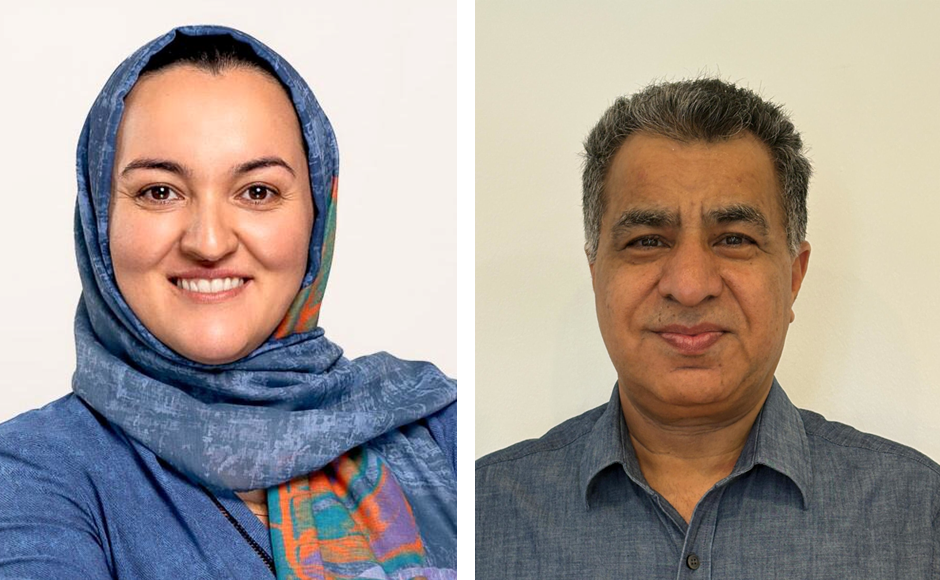
Dr. Laleh Seyyed-Kalantari
Dr. Shahram Mohanna
Disclaimer: The French version of this text has been auto-translated and has not been approved by the author.
Canada has established itself as a global leader in artificial intelligence (AI) through early investment in national AI strategies, world-class research institutes, and a strong commitment to Responsible AI development. Since the launch of the Pan-Canadian Artificial Intelligence Strategy, Canada has promoted AI innovation based on principles of trust, inclusion, human-centred design, social benefit and language fairness. While current Responsible AI frameworks emphasize fairness, transparency, accountability, privacy, safety, and human oversight (OECD, 2019; UNESCO, 2021; NIST, 2023), they do not sufficiently address linguistic diversity and dialect-based discrimination.
More recently, the federal AI for All strategy (AI for All) has reinforced the vision that AI should contribute to economic prosperity while ensuring that its benefits are broadly accessible across Canadian society. However, as large language models (LLMs) and generative AI systems become increasingly integrated into education, employment, public services, and everyday communication, new forms of algorithmic inequality are emerging that challenge existing definitions of dialect bias in AI.
Recent advances in natural language processing demonstrate that dialect bias is a measurable and socially significant challenge. LLMs are predominantly trained on internet-scale datasets where dominant language varieties, particularly Standard American English (SAE), are overrepresented. Recent studies have shown that LLMs may systematically favour dominant language varieties and demonstrate reduced performance when processing marginalized dialects. Consequently, models show dialect preference, interpret alternative dialects as incorrect, informal, of lower quality, or less trustworthy. Research on African American English (AAE), one of the most extensively studied examples of dialect inequality, has demonstrated that computational systems often fail to adequately represent dialect diversity, prefer SAE over AAE, even if the original context is African American and ‘correct’ the dialect to SAE. Fourghan et al. (2025) identified dialect preference bias in LLMs, demonstrating that models may implicitly associate SAE with a greater positive label compared to the same sentences in AAE. Similarly, Lin et al. (2025) showed that dialect variation can influence LLM reasoning performance and robustness, indicating that dialect bias is not limited to language generation but can affect broader cognitive capabilities of AI systems. Earlier work showed that demographic dialect variation can influence NLP performance and produce unfair outcomes in language technologies (Blodgett et al., 2016). More recent studies have developed cross-dialect evaluation frameworks and demonstrated that NLP systems frequently perform differently across linguistic varieties (Ziems et al., 2023). Such biases may reproduce social stereotypes associated with dialect differences, creating risks when AI systems are used for evaluation, decision-making, and communication (Fleisig et al., 2024).
These findings have important implications for Canada. As LLMs are adapted to diverse tasks such as hiring, education, law, etc., dialect bias impacts access to services and opportunities for marginalized populations. Although much existing research has focused on AAE within the United States, Canada is characterized by significant linguistic diversity, including Indigenous communities, multilingual immigrant populations, Francophone and Anglophone communities, and diverse regional language varieties. The principle of “AI for All” cannot be fully achieved if AI systems perform differently depending on individuals’ dialects. Language is not simply a technical input; it represents identity, culture, education, social participation, and access to opportunities. Therefore, dialect bias should be considered not only an AI challenge but also a national AI policy issue.
Current Canadian AI governance mechanisms provide an important foundation for addressing algorithmic risks. The Canadian government’s Algorithmic Impact Assessment (AIA) provides guidance for evaluating automated decision systems, including considerations related to bias, transparency, accountability, and potential harms (Treasury Board of Canada Secretariat, 2023). However, dialect bias is not explicitly included as a required assessment dimension. This creates a policy gap because linguistic discrimination can occur even when systems appear fair according to traditional demographic measures.
To address this gap, we call for a Canadian Dialect Fairness Framework (CDFF) as an extension of Canada’s Responsible AI ecosystem. The proposed framework introduces four complementary policy pillars. First, Canada should establish national dialect bias benchmarks for evaluating LLMs across diverse linguistic communities. Existing LLMs’ bias benchmarks, including StereoSet (Nadeem et al., 2022), RedditBias (Barikeri et al., 2021), and RealToxicityPrompts (Gehman et al., 2020), have advanced bias in AI measurement but do not adequately capture dialect diversity. A Canadian benchmark should incorporate diverse dialects such as but not limited to Indigenous English varieties, multicultural Canadian English, regional linguistic variations, French dialect diversity, Indian English dialect, and internationally recognized other marginalized dialects.
Second, the CDFF proposes mandatory dialect bias auditing for AI systems deployed in high-impact domains, including healthcare, education, employment, legal services, and government applications. These audits should evaluate differences in model performance, toxicity classification errors, sentiment interpretation, conversational quality, and decision outcomes across dialect groups. Like existing requirements for algorithmic risk assessment, dialect bias evaluation should become part of Responsible AI deployment rather than an optional research activity.
Third, the framework introduces transparency and reporting requirements. AI developers should document linguistic diversity within training datasets, dialect evaluation results, known limitations, and mitigation strategies. Such transparency would strengthen accountability and enable organizations and citizens to understand how AI systems perform across different communities.
Finally, the CDFF emphasizes continuous monitoring and community participation, recognizing that bias mitigation cannot be achieved solely through technical evaluation. Communities affected by AI systems should actively participate in defining bias criteria, evaluating harms, and shaping future AI governance.
Integrating dialect bias into Canada’s AI strategy would provide significant societal benefits. In healthcare, it could improve communication between AI systems and diverse patient populations, reducing the risk of misunderstanding symptoms or health information. In education, it could support fairer AI tutoring and assessment systems. In employment, it could reduce the possibility that automated recruitment systems evaluate candidates based on linguistic style rather than ability. In public services, it could ensure that all Canadians receive equitable access to AI-enabled government support.
We propose a fundamental shift in AI governance: from Responsible AI principles that define bias broadly toward Inclusive AI policies that explicitly recognize linguistic diversity. By establishing dialect bias as a new pillar of Canada’s AI strategy, Canada would become an international leader in protecting linguistic inclusion in generative AI. An inclusive AI ecosystem in Canada should not require individuals to completely alter their language, cultural identity, or communication style to receive fair responses; instead, the future of AI must be linguistically inclusive, culturally responsive, and socially equitable.
* Chat GPT 5.5 is used for English Editing.
Corresponding author: Dr. Laleh Seyyed-Kalantari