Prerequisites for Innovative Collaboration: Learning and Unlearning, Training and Transforming together.
Author(s):
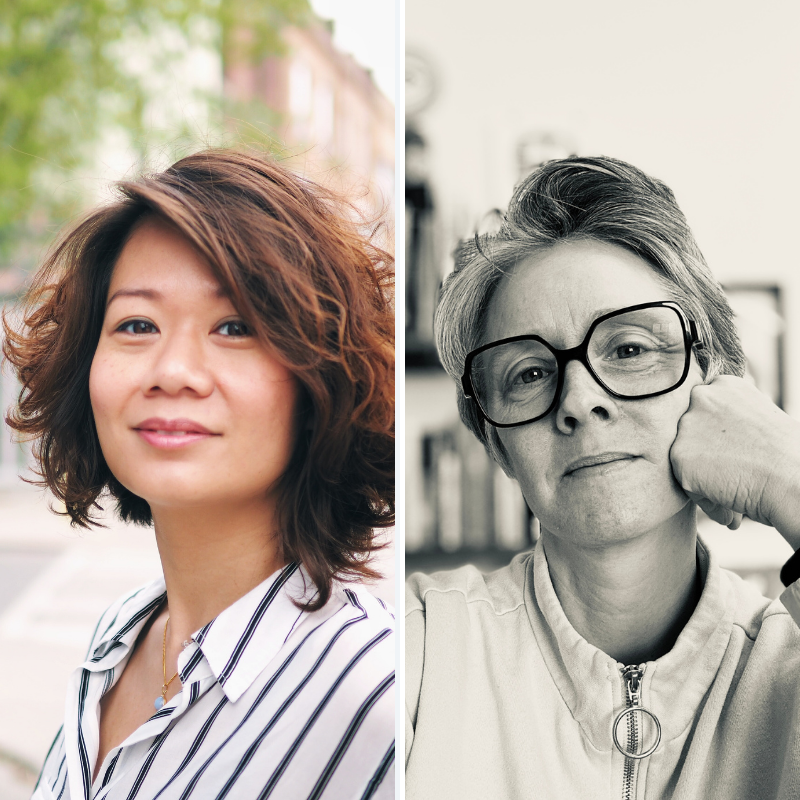
Helen Yung
Dr. Julie Théberge
Disclaimer: The English version of this text has been auto-translated and has not been approved by the author.
This text emerged from a conversation between its authors, Helen Yung (Laboratory for Artistic Intelligence / LAI) and Dr. Julie Théberge (HUPR – Human Potential Research Centre at the National Circus School). Through our exchanges about the emerging collaborations between our organizations, we discovered the conditions that allow people from different backgrounds to think and act together. The reflections that follow are the product of that dialogue.
What if the biggest obstacle to scientific innovation wasn’t a lack of funding, but a lack of creative human connection?
We talk a lot about interdisciplinary collaboration. We talk less about the approaches that make it possible: the intentional invitations and playful explorations that build trust, curiosity, and — yes — the time to get to know one another outside our roles and silos. As researchers working at the crossroads of art, science, and industry, our practice starts from the premise that these conditions don’t arise on their own: they must be cultivated, and artists know how to create the conditions conducive to human ingenuity.
Since 2025, we have been developing Art/In Forum, a new collaborative platform dedicated to interdisciplinary and cross-sectoral research and practice. We are an international collective of artists, scientists, researchers, public policy advisors, nonprofit leaders, and social innovators. Art/In Forum was created to bring together people from across the country and around the world, from a wide range of disciplines, contexts, and sectors, to research and innovate together.
Led by artists and artistic methods, Art/In Forum’s networking activities are intentionally designed to spark genuine, lively participation.
Fill Your Cup, for example, is a virtual salon-style gathering where participants can expect to leave with a replenished heart and a renewed appetite for interdisciplinary work. Our first two online Fill Your Cup events were themed “The Interdisciplinary Lexicon” and “Poets, Physicists, and Policy Advisors.”
It was during the Fill Your Cup devoted to the idea of an interdisciplinary lexicon that we explored the words, concepts, and concerns that allow people from different disciplines, sectors, and regions to recognize themselves in shared questions. That conversation revealed converging interests, particularly around the conditions that foster new forms of research, innovation, and collective action.
For HUPR, LAI, and our partners within Art/In Forum, sensitive and intentional hospitality creates conviviality, cultivates joy, supports psychological well-being, and improves the conditions conducive to innovation. Taking the time to connect, to meet where boundaries blur, requires time. The possibilities for building better futures emerge from this patient relationship-building.
We sometimes tell ourselves we don’t have the time — or, more often, we worry that others will say so. Yet deep within every scientist and researcher lies the desire to connect the dots. We are driven by curiosity and meaning, and yet the structures of our work rarely leave room for either. We all need spaces to exist differently, to see through another lens, to express ourselves outside the roles our disciplines assign us. These spaces nourish us, and ultimately enrich how we think and act.
Art/In Forum’s collaborative ecosystem offers opportunities to step sideways, if only for a breath. It allows us to stay grounded in our own conceptual territory while giving ourselves room to explore. The world’s most pressing problems demand cross-sector collaboration, but always aiming for big solutions can be exhausting and lead to burnout. Our gatherings are low-stakes, high-potential spaces, shaped by who shows up and how we move through a question together. Coming together across the seasons generates joy, builds bonds, creates shared references — and produces those small, meaningful victories that quietly accumulate into something larger.
Art/In Forum’s activities take place mainly in English, even though for many participants it is a second, third, or fourth language. And yet there is a deeper form of communication that flows beneath the words. “Honestly, I’m not that coherent in French either,” Julie jokes during a conversation about the collaborative work between HUPR and LAI. More seriously, she recalls having worked with people — all francophone — and sometimes feeling a disconnect that was hard to name. What seemed to be missing wasn’t related to language, or even to the disciplines themselves, but to something deeper: a shared understanding of the questions we’re trying to explore and the ways we construct meaning together.
“It was only in discovering your work,” she tells Helen, “that I could point to something and say: ‘That’s exactly what I mean!’ We understand each other’s work. I feel seen, and I see you.” Even though we don’t share the same mother tongue, we recognize ourselves in the same questions. We share epistemologies, values, systemic challenges. As researchers, we are learning to welcome strangeness as a promise of possibility.
In the coming years, LAI and HUPR hope to deepen this collaboration by developing projects that bring together artistic methods, scientific research, social innovation, and community engagement. We believe the complex challenges of our time demand more than interdisciplinary expertise: they call for spaces where different forms of knowledge, practice, and sensibility can meet, transform one another, and give rise to new possibilities for action.
This fall, our next Fill Your Cup will spotlight Dr. WhiteFeather Hunter’s BioArt research group in Canada.
Join us. Bring your discipline, your curiosity, and your quest for meaning and wonder.
Dr. Julie Théberge is a researcher specializing in artistic methodologies and collaborative practices at HUPR—the Centre for Research on Human Potential at the National Circus School in Montreal. HUPR brings together researchers, artists, educators, and practitioners around a shared question: how can artistic intelligence, embodied knowledge, and collaborative approaches help address complex challenges?
Helen Yung is the Artistic and Executive Director of the Laboratory for Artistic Intelligence (LAI). Founded in 2019, LAI specializes in bringing artists and artistic methods into other spheres of society where greater imagination is needed.