
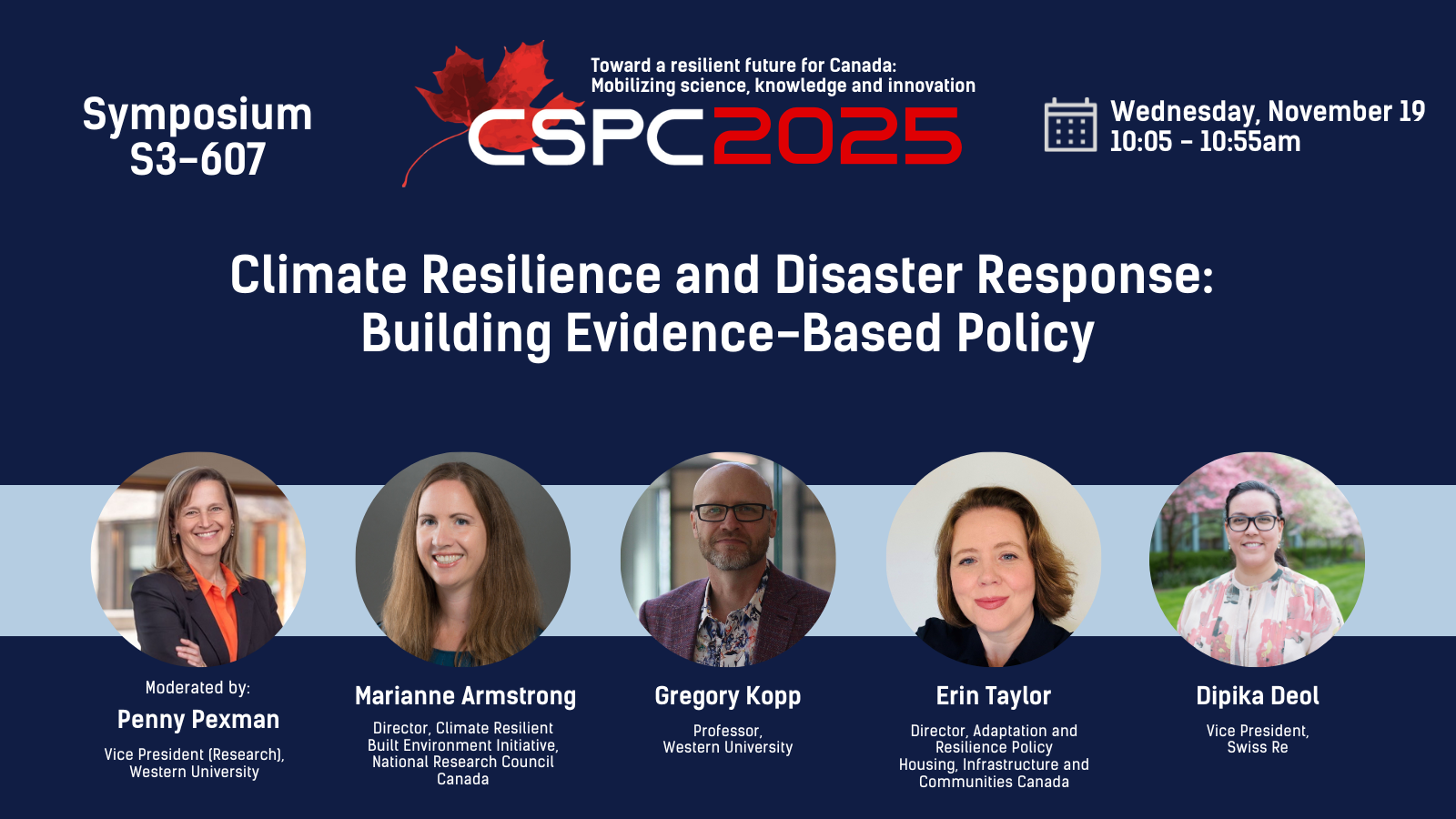
Abstract:
As climate change drives more frequent and severe weather events, infrastructure and communities face mounting risks. This panel will explore practical strategies to accelerate the adoption of proven engineering solutions that enhance resilience in both new and existing buildings. Experts from engineering, insurance, and policy sectors will highlight cost-effective approaches that also deliver co-benefits like ecosystem restoration, recreation, and carbon sequestration. Emphasizing equity, sustainability, and risk management, the discussion will offer actionable insights and evidence-based policy recommendations on integrating climate data, design standards, and resilient materials to protect lives, ensure service continuity, and reduce economic burdens in a changing climate.
Summary of Conversations
Discussion focused on the shift needed in Canada’s approach to infrastructure resilience, moving from minimum safety standards to strategies that actively reduce growing losses from extreme weather events. A major limitation of current building codes is that they are minimum standards, apply only to new construction, and do not cover community-level measures or all types of infrastructure. A critical barrier is “where” infrastructure is built, as land use planning is fragmented across numerous municipal regulators, leading to continued construction in high-risk areas. Speakers emphasized the need for a societal discussion on acceptable risk and highlighted the affordability challenge, where the incentive to build resiliently is split between developers and long-term owners. Solutions discussed included leveraging federal funding as an incentive, developing better data and guidance, and fostering multi-sectoral collaboration to de-risk and scale up resilience measures. The audience was engaged in selecting top national strategies to strengthen Canada’s infrastructure resilience. They voted to (1) to strengthen and enforce climate-adapted building codes, (2) integrate nature-based/green infrastructure into urban planning, (3) expand retrofits for existing vulnerable buildings, and (4) embed resilience standards into public infrastructure funding.
Take Away Messages/Current Status of Challenges
- Reliance on Minimum Standards: Current national building codes focus primarily on life safety and represent only the minimum required standards, failing to address the growing need for loss reduction and long-term climate resilience.
- Outdated Design Data: Historically, building designs relied on climate data that was 30 years in the past, a practice that is now beginning to shift toward designing for future climate projections.
- Fragmented Land Use Governance: Authority for deciding where infrastructure is built often lies with over 3,000 municipal regulators, making it extremely difficult to enforce unified policies against building in high-risk areas (e.g., floodplains, wildfire zones).
- Affordability and Split Incentives: The push for affordable housing often conflicts with the higher initial cost of climate-resilient construction, and developers (short-term builders) lack the long-term incentive for resilience that homeowners (long-term owners) possess.
- Insurance Availability Crisis: A significant portion of the population (about 8%) cannot secure flood insurance, and the overall affordability of insurance is deteriorating due to increasing catastrophe costs linked to climate change.
- Data and Research Gaps: There is a critical need for systematic data collection and research to better understand changing climate hazards (like severe storms) and to translate this uncertain scientific data into actionable guidance for engineers and policymakers.
- Code Adoption Lag Time: Even after the updated national model building code is released (expected to include future climate data), it will take time (up to five years) for provinces and territories to officially adopt and enforce the changes.
- Inadequate Post-Disaster Support: Traditional support systems often encourage simply rebuilding what was there before in the same high-risk location, highlighting a need for policies that enforce “build back better” principles.
Recommendations/Next Steps
- Strengthen and Enforce Climate-Adapted Codes: Prioritize strengthening and actively enforcing building codes to incorporate future climate data, moving beyond minimum safety to significantly reduce growing losses from extreme weather events.
- Leverage Federal Funding as an Incentive: Use the purchasing power of federal programs (like the Canada Housing Infrastructure Fund) to embed mandatory resilience requirements and risk mitigation into all public infrastructure funding.
- Advance Land Use Planning Policies: Implement more coordinated land use planning policies across all levels of government (especially with municipalities) to discourage and prevent new construction in known high-hazard areas.
- Improve Disaster Financial Assistance: Modernize post-disaster support programs (like the Disaster Financial Assistance Arrangements) to include flexibility and mechanisms that ensure infrastructure is built back better and relocated if necessary.
- Invest in Accessible Climate Risk Data: Fund and disseminate research to make climate risk data accessible and actionable for engineers, builders, and other professionals to inform their design and policy choices.
- Foster Cross-Sectoral Partnerships: Create effective collaborations between researchers, engineers, insurers, municipalities, and builders to co-develop and de-risk solutions (e.g., pilot studies, better data sharing) that ensure practicality and adoption.
- Scale Nature-Based Solutions: Increase research and implementation of nature-based and green infrastructure solutions for challenges like coastal resilience, urban flooding, and heat islanding, addressing the research challenge of identifying appropriate solutions for diverse Canadian locations.
- Incentivize Long-Term Resilience: Address the split incentive challenge by designing financial mechanisms, such as insurance discounts or other rewards, that encourage developers and homeowners to invest in higher-quality, climate-resilient construction.
* This summary is generated with the assistance of AI tools