

This event has passed.
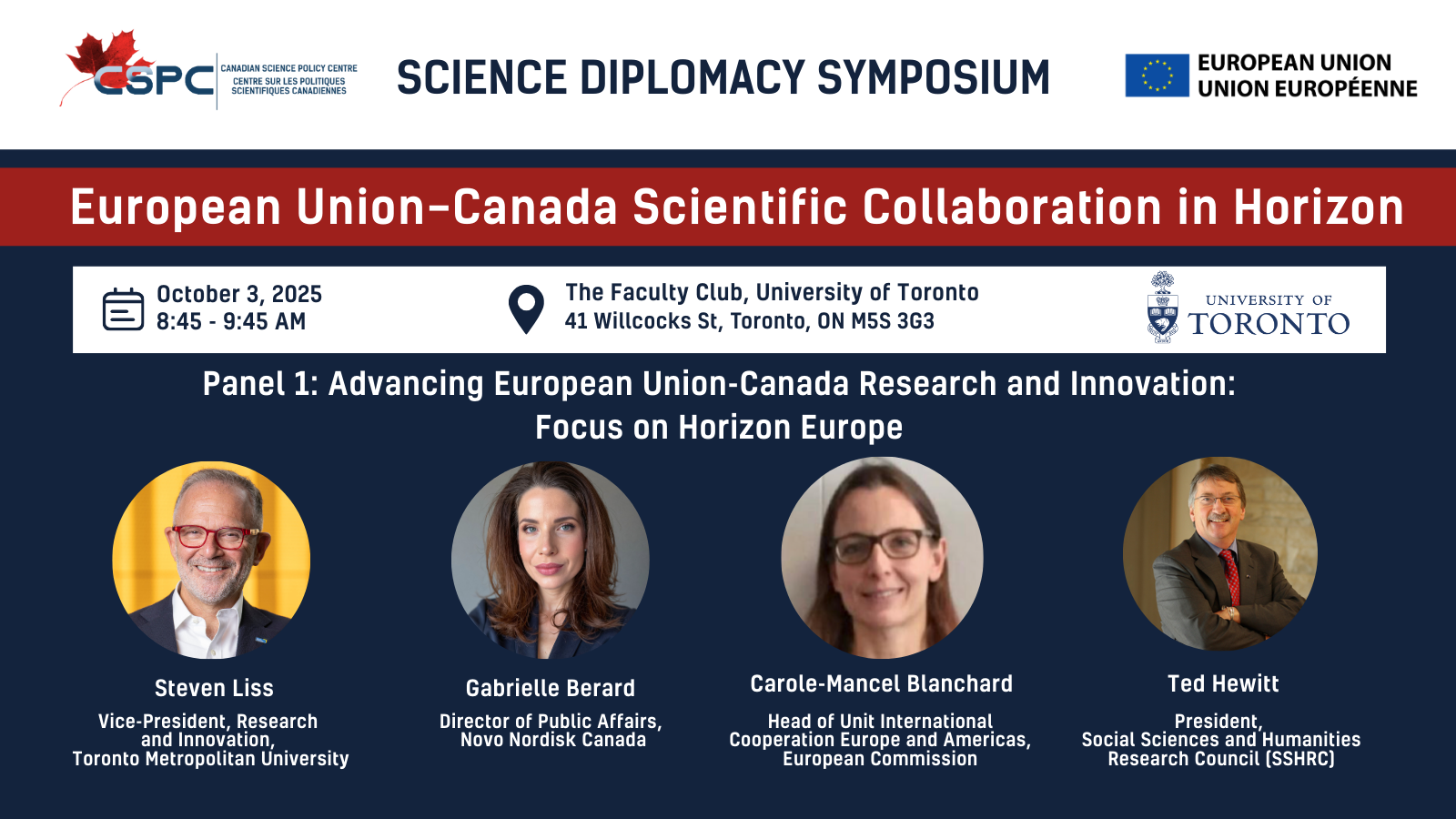

Steven N. Liss is Toronto Metropolitan University’s Vice-President, Research and Innovation, and a professor of Chemistry and Biology in the Faculty of Science. Steven returned to Toronto Metropolitan University in April 2017, following a decade of distinguished service at the University of Guelph and at Queen’s University, where he served as Vice-Principal (Research) and a professor of Environmental Studies and Chemical Engineering. He is an internationally recognized researcher in environmental biotechnology and engineering, wastewater and water management, having made important contributions and insights on microbial structures and processes in natural and engineered environmental systems.
For his contributions to Canada’s research and innovation ecosystem, Steven was awarded the Queen Elizabeth II Diamond Jubilee Medal in 2012. Steven has held positions on a number of boards and councils and continues to play an important leadership role in building digital infrastructure nationally.
Steven has been instrumental in advancing Toronto Metropolitan University’s significant research growth and the development of partnerships and collaborations in support of scaling and accelerating scholarly, creative and research activities across the University. He leads a bold strategic research plan, including the advancement of global partnerships and collaborations, and has overseen the creation of the Rogers Cybersecure Catalyst, the establishment of the Future Skills Centre, and the attraction of two Canada Excellence Research Chairs and a Canada First Research Excellence Fund award to TMU. He also played a critical role in advancing Toronto Metropolitan University’s as a leader in health and wellbeing, including chairing the planning process that led to the approval to establish TMU’s new medical school in Brampton.

Gabrielle Berard is a public affairs and advocacy professional specializing in health care policy. She is passionate about helping organizations understand how government works to support the alignment of business objectives with political priorities.
Gabrielle is the Head of Public Affairs at Novo Nordisk Canada, a global health care company based in Denmark dedicated to the development of innovative treatments for patients living with serious chronic diseases. In her current role, she leads policy, patient relations, and sustainability initiatives, as well as the development of community partnerships to support the company’s commitment to chronic disease prevention.
Prior to joining Novo Nordisk, Gabrielle spent over a decade working in the fields of government and health policy, including as a senior staffer to three Finance ministers. Since leaving politics, Gabrielle has built a career in health policy and advocacy, advising and representing professional associations, not-for-profit organizations and commercial industries to achieve their government affairs and public policy objectives.
Gabrielle lives in Ottawa with her husband and two daughters, where she also serves on the Board of Governors of Algonquin College.


Ted Hewitt was appointed president of SSHRC in March 2015. He served as the inaugural chair of the Canada Research Coordinating Committee from 2017 to 2019. Ted was vice-president, research and international relations, at Western University in London, Ontario, from 2004 to 2011, where he had been a professor of sociology since 1989. He was also a public policy scholar at the Brazil Institute of the Woodrow Wilson International Center for Scholars in Washington, D.C. A leading authority on Brazil, Ted has published in monographs, edited works and a range of academic journals. In 2018, Brazil’s Ministry of Foreign Relations named him Grand Officer of the Order of Rio Branco—one of the highest levels of merit—for the many years he has fostered bilateral business and research partnerships between Brazil and Canada.
Ted’s current research focuses on national and international innovation systems, with emphasis on the roles of universities, industry and government in promoting economic prosperity in Latin America and beyond. He is co-chair of the Canada-Brazil Joint Committee for Cooperation on Science, Technology and Innovation, and a member of the board of the Brazil-Canada Chamber of Commerce.
Ted holds a PhD in sociology from McMaster University.

Canadian Science Policy Centre
1595 16th Avenue, Suite 301
Richmond Hill, ON
L4B 3N9
E-mail:
[email protected]
Subscribe to the Canadian Science Policy Centre newsletter to keep up-to-date with the latest news, events and programs.
Innovation Policy refers to policies and public strategies, regulations, and initiatives aimed at promoting the development, diffusion, and application of new ideas, technologies, products, and services. It seeks to enhance capacity for innovation to drive economic growth, competitiveness, and social well-being. Innovation policy encompasses support for research and development (R&D), entrepreneurship and education, digital infrastructure, social innovation and collaboration between industry, academia, and government.
Science for Policy refers to the use of scientific knowledge, evidence, and expertise to inform and support decision-making in public policy. It involves translating complex scientific research into accessible insights that can guide the development, implementation, and evaluation of policies across various sectors, including (but not limited to) health, environment, technology, security, education, justice. Science for policy emphasizes evidence-based policymaking, where decisions are grounded in reliable data and research and knowledge rather than opinion or ideology.
Policy for Science refers to the set of governmental policies or institutional strategies, decisions, and frameworks that shape the funding, priorities, infrastructure, and governance of scientific research and development. It involves creating conditions that support scientific innovation, including investments in research institutions, training of scientists and development of science infrastructure, research integrity, EDIA, and international collaboration, ultimately aiming to strengthen the scientific enterprise to advance knowledge,economic development, and societal well-being.
Science for Policy refers to the use of scientific knowledge, evidence, and expertise to inform and support decision-making in public policy. It involves translating complex scientific research into accessible insights that can guide the development, implementation, and evaluation of policies across various sectors, including (but not limited to) health, environment, technology, security, education, justice. Science for policy emphasizes evidence-based policymaking, where decisions are grounded in reliable data and research and knowledge rather than opinion or ideology.
Science & Society refers to areas that strengthen public understanding and engagement with science, including the relationship between science and society. This includes but is not limited to science communication, education, journalism, public engagement, and citizen science and more.