
Who’s at the Table? The Question That Stays Implicit, and That Policy Inherits
Author(s):
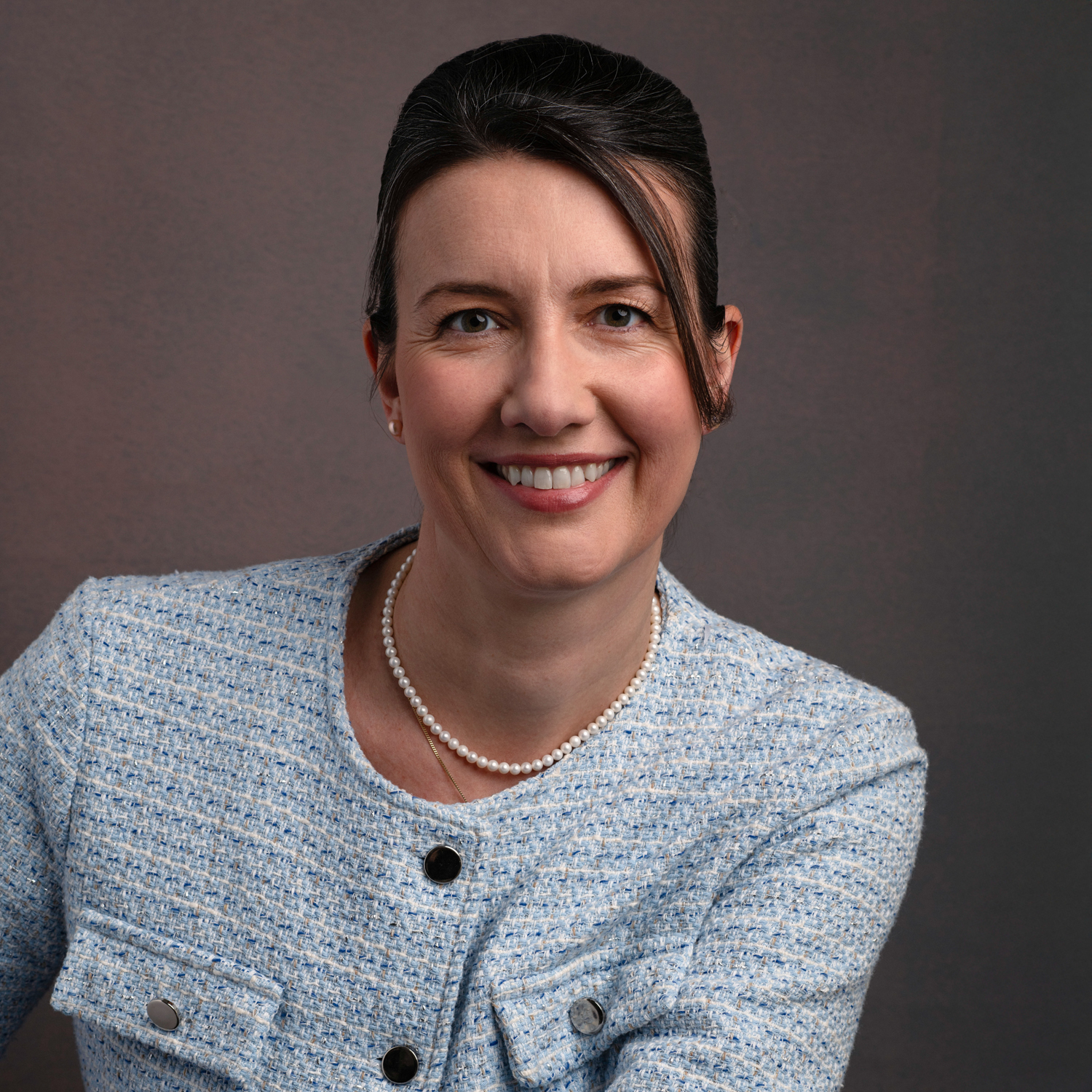
Claire Bertran
Disclaimer: The French version of this text has been auto-translated and has not been approved by the author.
Every research program begins with a decision rarely treated as one: who sits at the table before the questions are set?Not who writes the proposal or runs the analysis, but who is present when a field decides what is worth asking at all. It looks like logistics, but composition is the most consequential choice in the epistemic chain. Who is present shapes what counts as a legitimate question; the questions shape the data; the data, the findings; the findings, the policies; the policies, lives. At each step, the initial composition compounds, until the narrowing looks representative rather than structural. Yet a narrow table produces a narrow map, and the missing territory stays invisible.
This editorial uses francophone veterans as a case study,not because language is the only axis of narrowing, but because the mechanism is uniquely visible here. A recent Atlas Institute for Veterans and Families report, drawn from a roundtable with francophone veterans, families, service providers, and researchers, traces their experience from research to policy to health outcomes. What emerges is not a story of insufficient effort or flawed instruments, but of a frame set too narrowly at the start. The table, not the axis, determines who is seen — and who is not.
A reasonable objection arrives early: if every group a table leaves out deserves a seat, no table is ever wide enough. But not all absences have the same impact. Every omission matters, yet not every omission renders groups invisible in the same way. The most damaging omissions are those a field produces systematically — the groups its habits of work repeatedly overlook or misclassify. A population can be visible on every axis and yet whole on none: counted under gender, disability, or years of service, but never constituted as a group in its own right.
Francophone Veterans: Upstream Narrowing
Francophone veterans are roughly one in four Canadian veterans.¹ Veterans Affairs Canada’s 2023 Community Health Needs Assessment, built to include equity-deserving and hard-to-reach veterans, set out to surface experiences of equity seeking and serving veteran groups. Francophone veterans were consulted, but they were never treated as a distinct group. They entered as a communication-access variable — whether a veteran could be served in their own language — a variable clarifying other themes shared across the whole population.
When even an instrument built to widen the table reproduces the omission, the narrowing is upstream of the instrument itself. The question is not whether a francophone veteran is present,but whether the apparatus has ever constituted francophone veterans as a group whose health is shaped by language and culture, and pursued that as knowledge worth building. Counted as veterans who happen to be francophone, their experience does not disappear; it fragments. The remedy is not more careful downstream solutions but constitution as a unique group, one naming its own priorities rather than being described in someone else’s terms.
The Anglonormative Frame: Why No One Catches the Gap
The narrowing of the table and the solutions are both upstream and system-wide. A system that misses francophone veterans might, in principle, have its resulting knowledge gap caught by the wider body of research. Still, when that wider body itself lacks francophone-specific inquiry, the gap persists unbridged. A federal panel on research in French recently documented what it calls anglonormativity: the Canadian research economy measures excellence against publications in high-prestige journals, nearly all English, and work grounded in minority-language realities is often dismissed as too particular to garner sufficient interest. This is how insufficient research in French leads to insufficient research on francophone realities. Knowledge systems that narrow on the same axis cannot catch each other’s omission.
Francophone veterans and their families are one clear expression of that shortfall: a population scarcely constituted as an object of study, the knowledge not funded into existence because the frame that would have called for it was never set.
Downstream solutions alone cannot repair this. A system can identify francophone veterans on a language axis and attempt to self-correct at the point of service or care, but it cannot rebuild a knowledge base that was never built in the first place. The questions, categories, and clinical instruments a field uses are inherited from the frame that made them; translation cannot account for questions that were never asked in the first place. This is especially true in health, where, as the panel notes, knowledge is population-specific, and perhaps most acute in mental health, where the expression of distress intertwines with language and culture. An instrument conceived in English does not merely need translating; applied across that gap, it underserves the populations it first excluded. A faster service in French will simply equalize access to a frame that required widening to begin with.
How the Narrowing Hardens and What It Costs
This is where the narrow table translates into policies that exclude. Findings come with their stated limitations, but once cited, they are carried into the next instrument, each citation further removed from its original context, eventually informing guidance applied to the whole population as though the original decision-table suffered no omissions. What the research could not see, the policy cannot serve, and the omission set at ideation reaches the veteran as care that produces unequal health outcomes on the basis of language. The recent Standing Senate Committee’s Breaking Down Language Barriers in Health Care report found that language barriers compromise the safety and quality of care for official-language-minority communities — francophones outside Quebec foremost among them — and called for federal leadership.
A federal strategy for research in French has now been recommended, and the granting agencies it would work through are named, such as the Canadian Institutes of Health Research.. The table is being set now. The demand is not that francophone veterans set a national population’s questions; that would only rebuild the narrow table facing the other way.
It is prior to that: a national frame should find out who it is leaving out before it begins, not discover them years later as the populations it never constituted.
Make Composition Visible
The next step is concrete, and the science-policy field is well placed to take it: make composition visible. Every policy should include a plain record of who sat at ideation tables and who did not. Readers can already see limitations; they cannot yet see composition, though that is where conclusions get implicitly narrowed. The absences worth recording are not every conceivable one, only the systematic ones a field produces by habit, which is exactly where accountability is not only possible, but necessary.
Francophone veterans are one case, chosen because their experience traces from ideation to outcomes end to end. A table almost always leaves someone in the blank space between its categories, and rarely announces who did not sit at the table. The discipline is not to seat everyone—no table can—but to ask, before the questions are set, who the frame cannot see. That is an invitation for anyone who works where knowledge becomes policy.
¹ Convergent estimates cluster around one quarter: 25.4% (2021 Census), 23.8% (2022 CVHS and VAC National Survey), 21.3% (2024 CVHS). See the Atlas Institute for Veterans and Families roundtable report.
The views expressed in this editorial are those of the author and do not necessarily reflect the opinions of the Atlas Institute for Veterans and Families.
AI Disclaimer: AI tools (Le Chat by Mistral AI) were used for copy editing. All final content was written, reviewed, verified, and approved by the author to ensure accuracy, clarity, and integrity.