
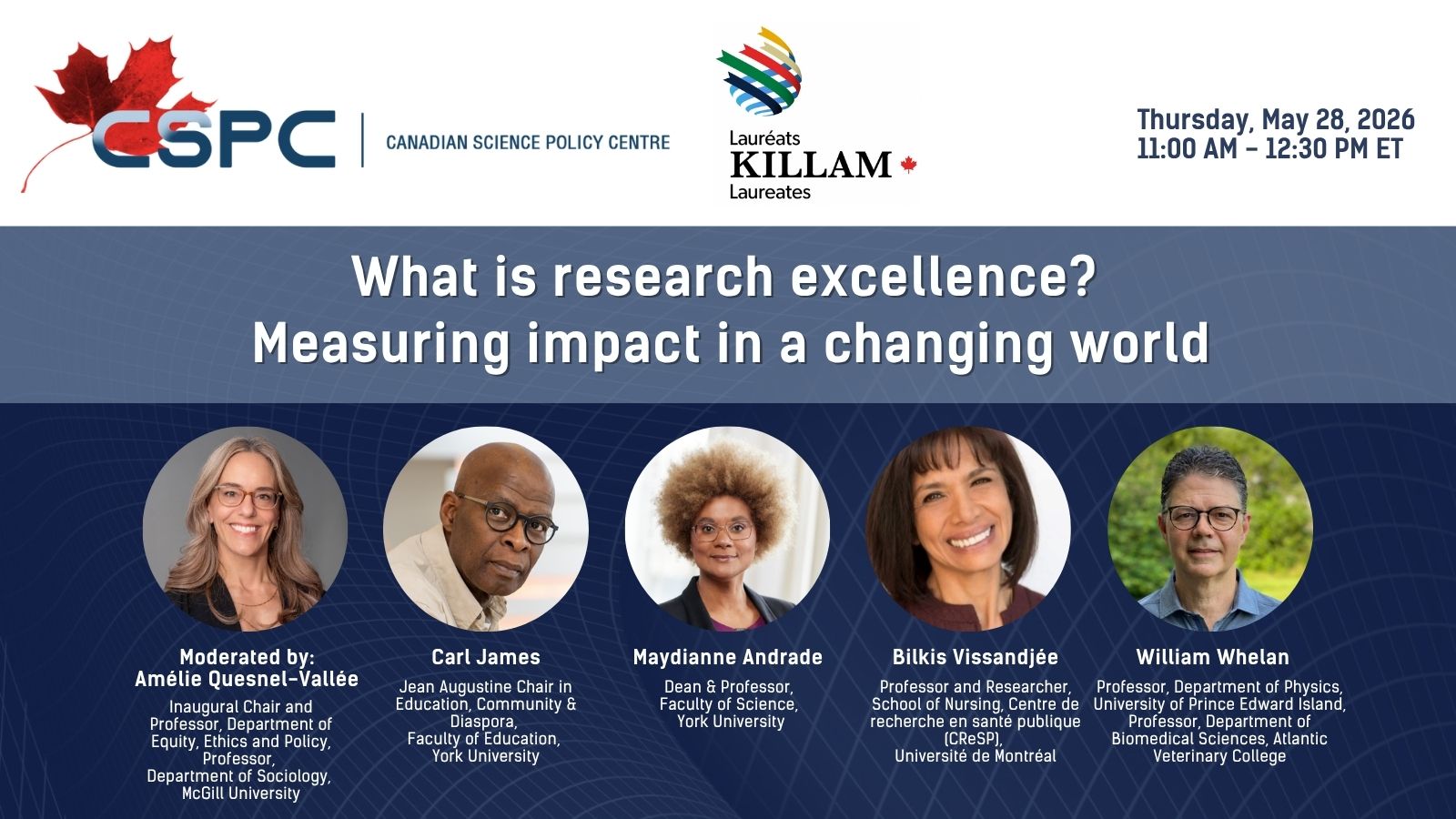
What is research excellence? Measuring impact in a changing world
May 28 @ 11:00 am - 12:30 pm EDT
Peer review underpins nearly all major academic assessments, from publications and funding to promotions and awards. Despite its centrality in the research ecosystem, peer review has a well-documented number of flaws that can lead to unfair assessment and disadvantage applicants, including: a lack of concordance between reviewers; over-reliance on quantitative scores with small numerical margins defining top candidates; variation in the weight given to different application components; recurrent patterns of cognitive biases such as familiarity; and biases that undervalue applications from new researchers, researchers at smaller institutions, women, and some groups of racialized people, regardless of the objective merits of the application, proposal, or nomination.
This panel will examine both the challenges and potential solutions to inequities in peer review, drawing on the National Killam Selection Committee’s 2021–2024 experience adjudicating some of Canada’s most prestigious national scholarly honours. The discussion will highlight data-informed strategies, including anonymization, categorical ranking, structured rubrics, and equalization processes that aim to mitigate bias while maintaining fairness and excellence.
Panelists are a diverse representation of the Canadian research landscape and hold significant experience in research assessment and a uniformed interest in incorporating evidence-informed principles of excellence and equity into adjudication. The panelists will explore how bias manifests, what evidence reveals about its effects, and what actions can be taken to uphold fair assessment.
Speaker information coming soon!
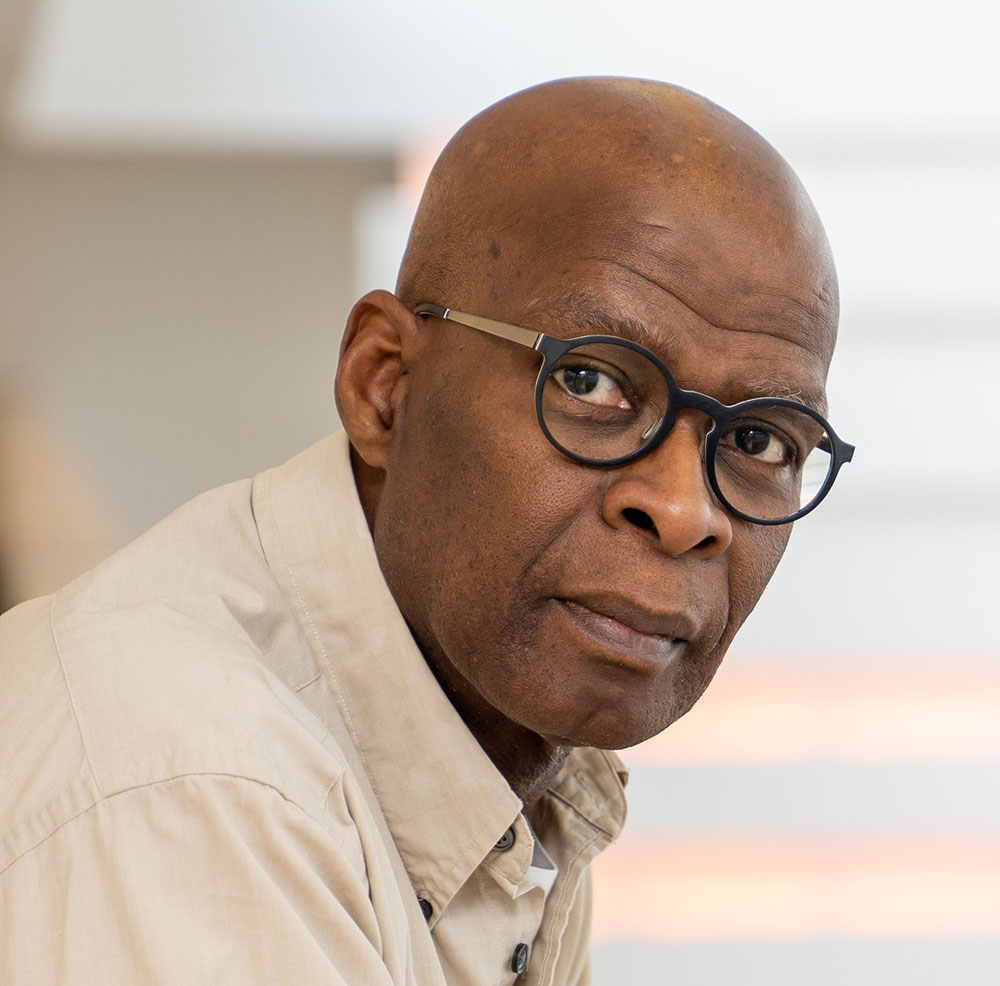
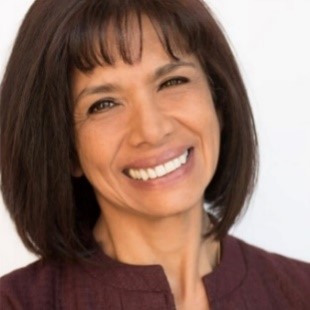
Bilkis Vissandjée
Professor and Researcher, School of Nursing, Centre de recherche en santé publique (CReSP), Université de Montréal
Researcher, SHERPA University Institute and
Fellow, Canadian Academy of Health Sciences (CAHS)
Chair, Quebec Provincial Committee on Access to Health and Social Services for Ethnocultural Communities